From leaving Germany for LA and creating an alter ego to opening for Doja Cat with four hours’ notice, LIA LIA has always made things happen her own way. As she releases her debut album Armor, she talks vulnerability, anime, Anne Imhof and finding her place along the way.
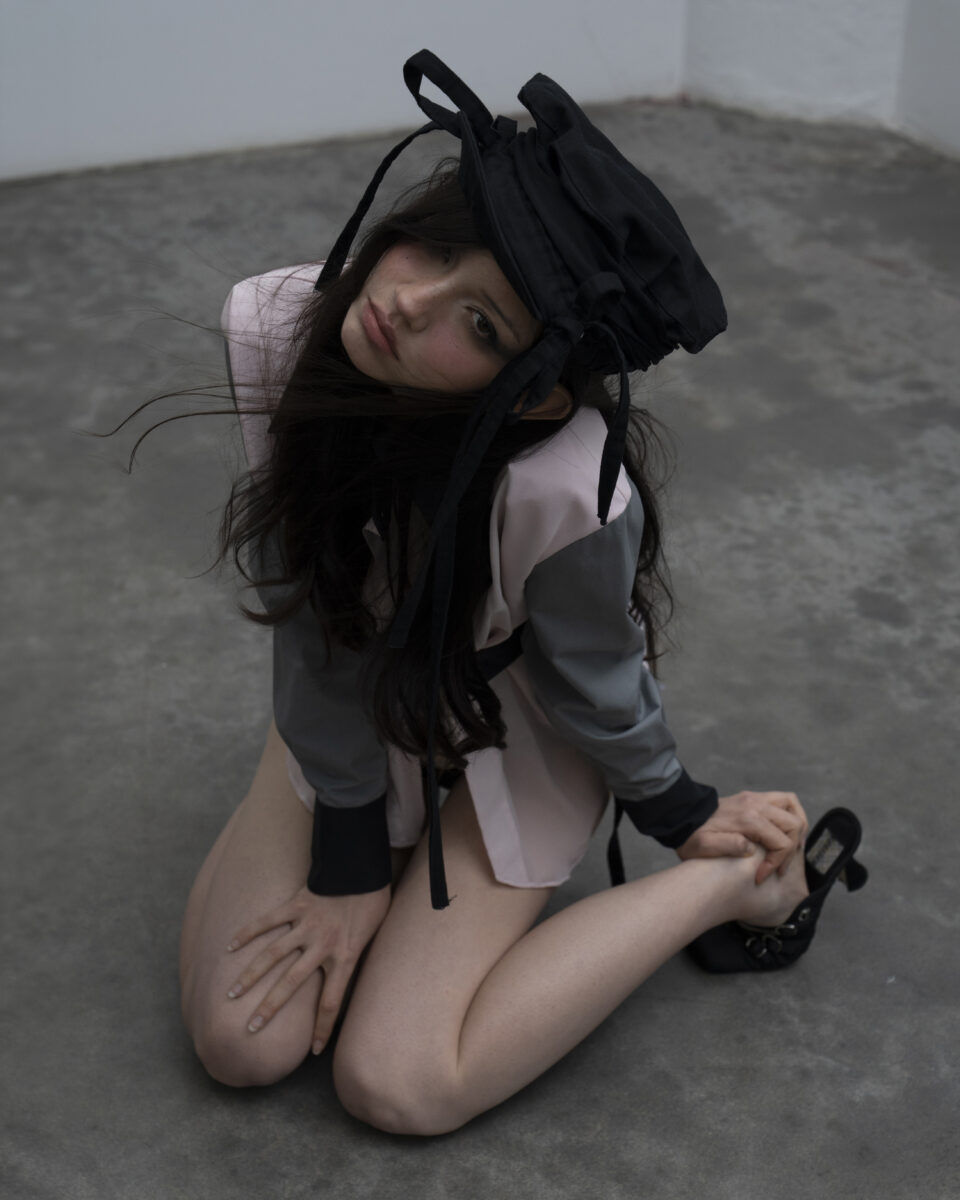
LIA LIA is the kind of person you just want to keep talking to, which is probably why our conversation ends up going over the amount of time planned. She’s chatty, funny and has plenty to say about the highs, lows of becoming a musician, her determination to make it outside of her home country of Germany and all the things that inform her work, from anime to her current reads, which she even offers to send me a list of. That openness is fitting for an artist whose debut album is about letting all the layers fall away.
There’s also something very matter-of-fact about the way LIA LIA talks about her career. She decided she wanted to make music, so she made music. She felt she needed to leave Germany, so she left and went to LA. She wanted to meet the right people, so sent DMs and emails introducing herself. There doesn’t seem to have been much room for a Plan B. Even the artist persona she became along the way was something she intuitively created with a €20 blonde wig she put on to perform as LIA LIA, and later her characteristic schoolgirl uniform, a formula she has stuck to since.
Armor is a record about vulnerability written between Berlin, New York and Los Angeles, and it outlines a period of change for LIA LIA, who went from spending two years of her life dealing with chronic illness to finding herself in New York working on Doom, a three-hour immersive performance art piece and opera by German artist Anne Imhof, surrounded by artists, performers and new friends, finding love and finally feeling at home. “For the first time I felt like I broke free,” she tells me over a call from Berlin.
Across the album, made together with guitarist Luke Knight and producer Jonathan Visger, fragility isn’t something she wanted to shy away from. Her lyrics are direct and confessional: she writes as honestly as she speaks. Her vocals are raw and immediate, with minimal production or vocal effects, while live drums, bass, guitars and electronic textures build around them. At times, the record is so intimate that you can even hear her breathing.
Armor feels like the documentation of a girl becoming herself and growing up, getting sick and getting better, leaving home and finding new ones, falling out of and in love. As the album is released, LIA LIA talks us through growing up between Germany and China, finding her alter ego, making music with her eyes closed, becoming part of Anne Imhof’s Doom, opening for Doja Cat with four hours’ notice and why all you really need is a blonde wig or a miniskirt.
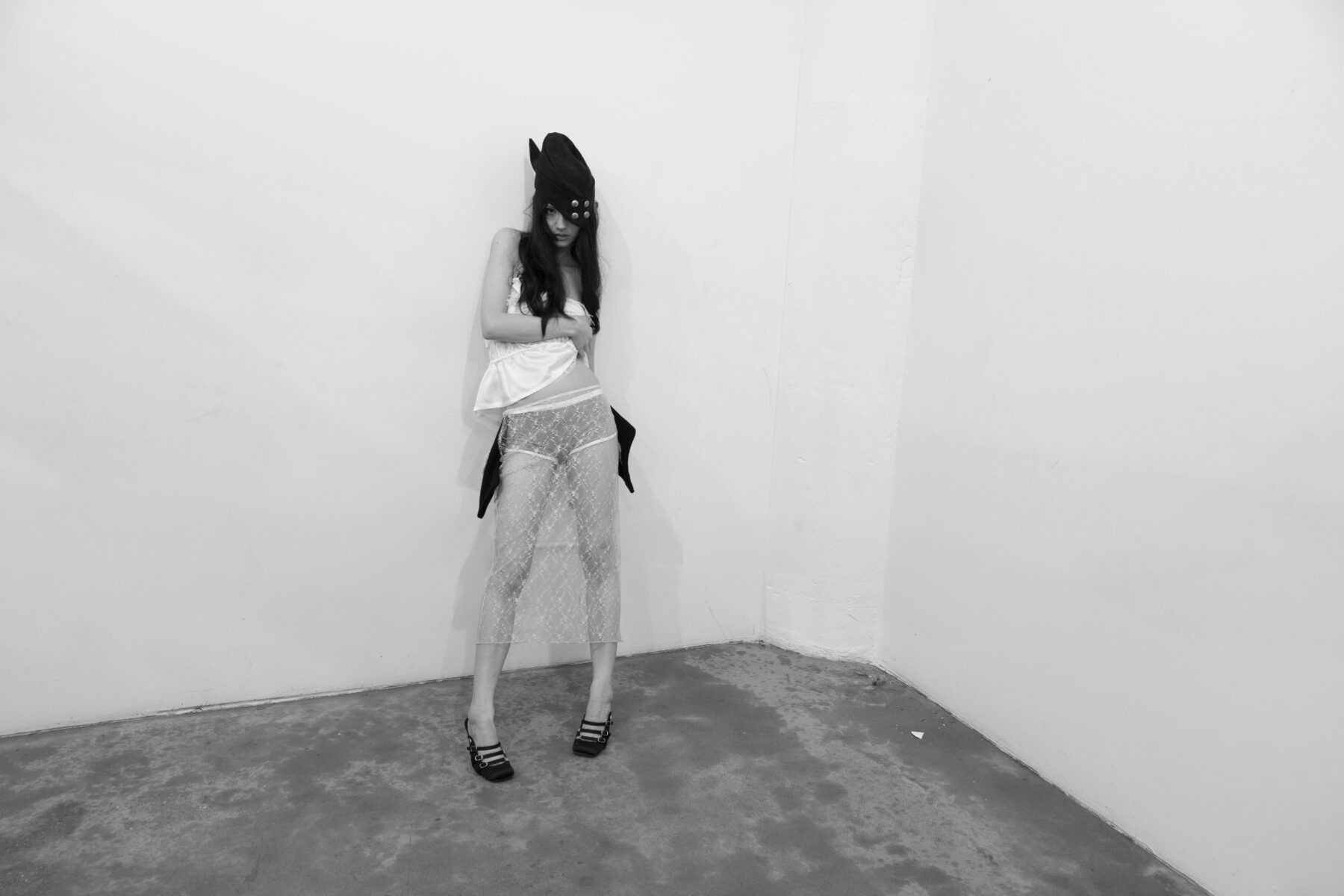
You grew up between Germany and China. What’s the best thing about growing up between two cultures, and how has that shaped your work?
Being mixed is interesting because you’re kind of like an in-between person. The place where I went to school in Germany was super white, so people always treated me as fully Chinese. It’s hard to feel German when you’re always being treated differently. When I went to China, because I also don’t look or am fully Chinese, it was a similar experience, but on the opposite end of the spectrum.
Both of my parents are painters, so I was lucky to grow up in an open environment which was quite multicultural because they were surrounded by a lot of artists and actors and free thinkers. My first musical influences probably were Sichuan opera from China and German church choir. I think, also, not belonging in both places gave me the motivation to create my own world through music and visuals and reading. In recent years there’s been way more visibility and togetherness for mixed people.
Was music always something you felt you wanted to do?
My mom told me that when she gave birth to me in the hospital, which was obviously a super traumatic experience, she could hear the woman next to her scream, and my mom was like, ‘Oh my god, I don’t want to get bad energy,’ so she tried to sing instead of screaming. She says that then, when I came out, instead of screaming I was singing too. But she probably romanticised this story.
So when did you actually decide to go for it? What was the beginning of LIA LIA?
I knew that if I wanted to do this for real I couldn’t have a plan B. I felt like I just needed to do this or die. I just went for it, and I thought Berlin was the nearest big city, so I went there. But it’s hard to be successful in Germany if you don’t look German and you don’t sing in German, and I think I always wanted to reach as many people as possible. Hence why I started writing my diary in English when I was like 12. So then I went to LA to just figure it out. It’s not easy to break out from Berlin, so I tried to make it work from the outside.
What was it actually like arriving in LA?
I stayed in this bunk bed with a shared kitchen in this building that also had studios. I just went out and met with all the people who I DMed or emailed beforehand. I had no idea how the industry worked and I had just left the management I had in Germany, so I just went to LA and was like, ‘Hi, I’m Lia. Nice to meet you.’ I put on my blonde wig and it worked.
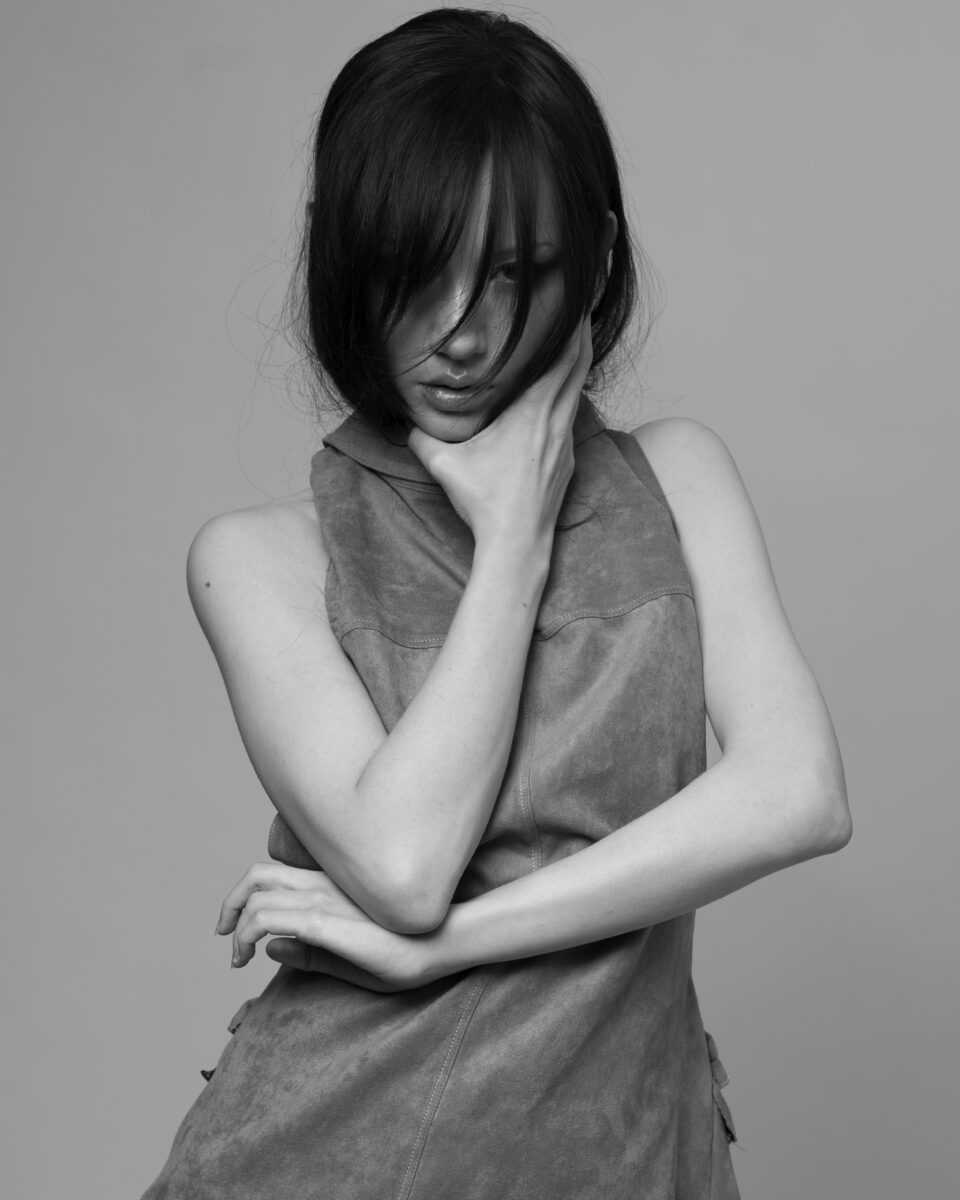
And how do you like to make music?
I tried those writing sessions in LA where you meet a producer, but when I met Luke, my guitarist, three years ago, he was only 18, and that’s when I met for the first time someone who, the same way I am with the vocals or songwriting, he is the same on the guitar. Writing with him almost feels like dancing to a song with your eyes closed. Making the music is such an almost spiritual experience. It always feels to me like I didn’t write the song, but it’s something which has been given to me. It’s such a connection where you feel everything and you’ll be able to receive it.
Do you remember your first show as LIA LIA?
I had a blonde wig from Amazon which was around 20 euros. When I decided to be LIA LIA, I didn’t tell any of my friends, but I got asked to play at a venue which was half bicycle-crew space and half painting studio, and I didn’t tell any of my friends. I just pulled up in this blonde wig and ski goggles. The goggles were there to hide the seam of the cheap wig. Afterwards people would ask me, ‘Is this you?’ It’s kind of scary to put yourself out there as an artist, so the blonde LIA LIA was my alter ego which was not afraid of anything.
You’ve spoken before about anime being a big influence for your work. What was it about anime that stayed with you?
I used to watch so much anime when I was sad or depressed. It was my comfort thing, I would just binge watch it, so it of course influenced me. But I haven’t been watching anime during the last year, so now I mostly read books. My last favourite book was Pattern Recognition by William Gibson, Big City Bright Lights, I forgot the author right now, but it’s about a young journalist in New York, Walking Through Clear Water in a Pool Painted Black by Cookie Miller, Girl in a Band by Kim Gordon. I think when you watch anime or when you read a book, it’s the only time where you can take a break from yourself.
You’ve also worked with Anne Imhof on Doom, alongside people like actress Talia Ryder or photographer Tess Petronio, etc. How did that come about?
I met Anne at a wedding, and then she invited me to a party, and then at some point she called me and said, ‘I love your music, do you want to be in my play?’ It’s like an adaptation of Romeo and Juliet, and I had no idea what this was gonna be about. I just went to New York, I didn’t know anyone, and everyone was like, say what you do and introduce yourself. It was in this massive hall and it was like an immersive performance. I was acting on a little stage like in prom. We also started going out, like all connecting, and it was beautiful. I feel like we made friends for life.
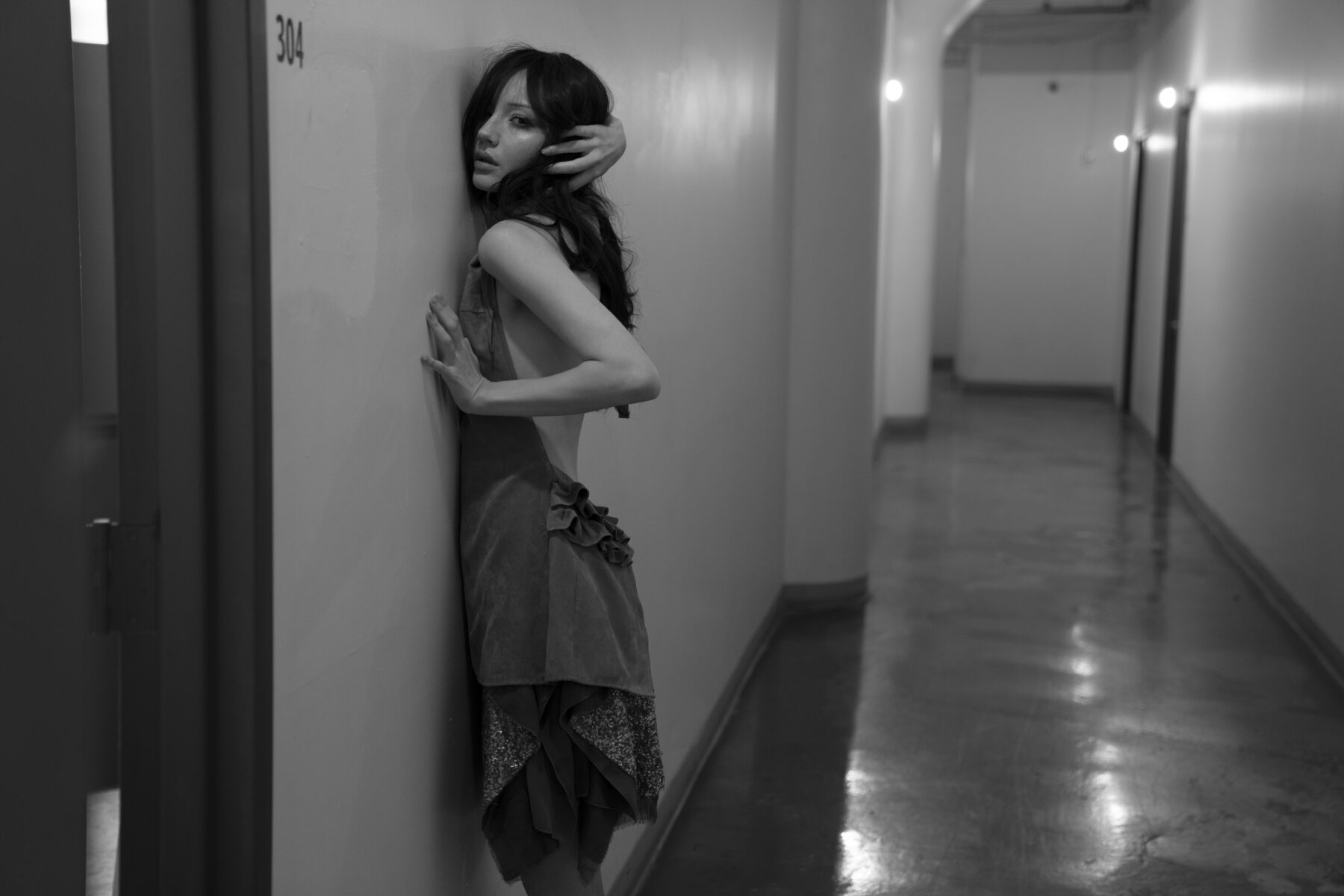
How was your experience opening for Doja Cat on tour?
Doja Cat came to Berlin on tour, and I just messaged her producer and her manager. I asked if they had an opener for Berlin, and at the last minute they replied saying their support act cancelled. I only had four hours till the show but I had to say yes. I did it and played the backing track with my phone. I didn’t have the uniform back then, and then I had my friends do my makeup, and I wore horrible green pants. I didn’t even have much music out back then, I just had demos and backing tracks. I played it from an aux cable.
After, they asked me to join her in Hamburg too, and after to join her in America. I didn’t have a manager at this point, I didn’t have money, and no US visa, so in the end I couldn’t do it. But we hung out, she watched my show in Hamburg. I had a sparkly mic at the time, which I bedazzled by myself, and she was like, ‘Oh my god, you look like such a little anime character.’ She showed me all her chapstick collection, where she had like the Sprite one, Fanta, Coke. We had some champagne together, so that was really, really cute and wholesome.
The album was originally going to be called Fallen. What changed, and how did it become Armour?
The original title of the album was ‘Fallen’ because I was sick for two years with a chronic illness. I couldn’t even leave the house, take a shower, or go to the grocery store. But then I had this great opportunity to do Doom with Anne Imhof in New York, and while I did Doom I got an album deal. I met friends and for the first time I felt like I broke free. I felt like I could see the world through such different eyes. I was away, I was financially independent, and got my health back. The album then became a love letter to the world about falling in love with yourself, with life, with friends and with this special person I met. It didn’t feel like falling.
It sounds like the album became much more about coming back to yourself. Was that something you were consciously thinking about while making it?
Being an artist, for me, is just trying to be most authentic to yourself, which is scary because nobody likes themselves. I mean, I don’t know how many people truly like themselves. I always wished to be someone else when I was younger. In this album I tried to strip away all the layers and barriers. What’s left is the true essence of how I felt in that moment, and that’s why the vocals don’t have much production, there’s not much vocal effect on it, you have all those different drums which are played live. There’s obviously some electronic elements, but it’s bare and raw.
I think clothes can be armour too, you know. The uniform is nice because it’s so simple, but I think most fashionable people put on clothes and you can say something without saying it. And when you take everything away, like what’s left? So yeah, that’s why it’s called Armor.
I want to hear more about the uniform, actually. Why did you decide to stick to one style?
I started with the uniform in 2020 and I was watching a lot of anime. I always liked surreal realism or real surrealism. The tie a friend gave to me from her bartending job, the skirt from my mom, the shirts from a school supply shop, the socks I got in Japan and the shoes are Shu Shu Tong. I have had the same uniform since 2020 and I think it can be timeless to stick with a uniform. It’s also so accessible, everyone can wear this uniform.
Photographer Joaquin Castillo
Hair and MUA Humberto Moya
Styling Bootas He
Lighting Luis lopez


